


Table of contents
Accurate, accessible care records aren't just a regulatory requirement. They're the foundation of safe, responsive, person-centred care.
When records are incomplete, out of date, or hard to access, the consequences are real: medication errors, delayed responses to deteriorating health, and lost time during inspections. When they're clear and current, care teams can act faster, families feel reassured, and inspectors can see evidence of quality without chasing paperwork.
This guide explains what good record-keeping looks like in practice, what records you need to keep, how long to retain them, and why digital systems address the limitations of paper-based processes.
What is record-keeping in health and social care?
At its core, record-keeping is about documenting what you've done, what you've observed, the decisions you've made, and what happens next.
Whether digital or paper-based, daily notes or formal assessments, care records share the same purpose: to communicate the right information to the right people at the right time.
This includes:
- Personal details and medical histories
- Care plans and support assessments
- Legal documents and consent forms
- Accommodation and financial arrangements
- Referral notes and handover information
- Reports for local authorities or regulators
- Correspondence between care professionals, health services, and families
- Safeguarding concerns and incident reports
Well-maintained records enable care professionals to understand each person's needs, track changes over time, and coordinate with other services. They're not just administrative artefacts. They're the mechanism that allows care to be safe, continuous, and tailored to the individual.
Why record-keeping matters (beyond compliance)
Care records serve three critical functions:
1. They enable continuity of care
When carers can see what happened during the last visit (medication given, mood changes, food intake, concerns raised), they can respond appropriately. Without that context, care becomes reactive rather than proactive.
Real-time access to records means the next carer isn't starting from scratch. They know what's been done, what's been flagged, and what needs attention.
2. They surface patterns that predict problems
A single missed meal might not be significant. Three missed meals in a week suggests something needs investigating. Records that are updated consistently allow care managers to spot trends before they become crises: weight loss, increased falls, medication refusals, mood changes.
3. They provide evidence during inspections
CQC inspectors don't just want to see that you have policies. They want to see that you follow them. Clear audit trails show:
- What care was delivered, by whom, and when
- How you responded to incidents or concerns
- That care plans are reviewed and updated regularly
- That medication administration is accurate and accountable
Providers using digital systems report being able to pull inspection-ready reports in minutes rather than hours.
The consequences of poor record-keeping
When records are incomplete, unclear, or not kept up to date, the impact extends beyond administrative inconvenience.
Safety and quality risks:
- Medication errors – missing or illegible records mean carers may not know what medication has been given, when, or by whom
- Missed deterioration – patterns (weight loss, increased confusion, declining mobility) go unnoticed without consistent documentation
- Fragmented care – without a full picture of medical history, allergies, or preferences, care becomes generic rather than person-centred
- Delayed interventions – valuable time is lost searching for information or clarifying uncertainties
Operational and compliance issues:
- Failed inspections – inspectors expect to see clear evidence of care delivery and decision-making
- Difficult safeguarding investigations – incomplete records make it harder to establish what happened and when and can undermine your compliance with safeguarding obligations under the Care Act.
- Erosion of accountability – if there's no record of what was done, it's difficult to demonstrate compliance or defend against complaints
- Breakdown in collaboration – GPs, district nurses, and social workers can't coordinate effectively without access to accurate information
Impact on teams:
- Repeated assessments – staff waste time gathering information that should already be documented
- Increased stress – carers feel uncertain about what's been done and what they're supposed to do next
- Missed learning – without clear records, mistakes may go unrecognised and repeated
Ultimately, poor record-keeping undermines trust. Families lose confidence, care quality suffers, and regulatory bodies intervene.
What types of records need to be kept?
Care providers must maintain a comprehensive range of documentation to ensure safe, compliant, and person-centred care.
Personal and medical information:
- Full medical history, including diagnoses and hospital admissions
- Current medications, dosages, and administration schedules
- Known allergies and adverse reactions
- Emergency contacts and next of kin details
Care planning and delivery:
- Initial assessments and ongoing reviews
- Individualised care plans, including preferences, routines, and goals
- Daily care notes documenting visits and observations
- Medication Administration Records (MAR charts) showing what was given, when, and by whom
- Digital body maps for wounds, pressure sores, or bruising
Legal and financial records:
- Consent forms for care delivery, information sharing, and photography
- Capacity assessments and best interest decisions
- Tenancy or accommodation agreements
- Financial arrangements and invoicing records
Communication and collaboration:
- Correspondence with GPs, hospitals, district nurses, and social workers
- Hospital discharge summaries
- Referral notes and handover information
- Family feedback and updates
Safeguarding and incidents:
- Safeguarding concerns, referrals, and outcomes
- Incident and accident reports
- Records of actions taken in response to concerns
Each of these records plays a role in maintaining continuity, safety, and accountability across the care journey.
Guiding principles of good record-keeping
Effective documentation isn't just about volume. It's about recording the right information in a way that's useful, accessible, and secure.
Person-centred records
Records should reflect the individual's unique needs, preferences, and circumstances. This means documenting not just medical details but also what matters to the person: their routines, relationships, interests, and goals.
Person-centred records make it easier to deliver care that respects dignity and autonomy.
Clear, accurate, and specific
Vague language is not useful. "Client seemed fine" tells you nothing. "Client ate full breakfast, chatted about grandchildren, walked to bathroom independently without mobility aid" is specific and informative.
Record observable facts: what you saw, what the person said, what you did. Avoid speculation or assumptions.
Up to date and regularly reviewed
Records updated hours or days after a visit are less reliable. Memory fades. Details get confused.
Health conditions, preferences, and care plans evolve. Monthly reviews help ensure records stay accurate and relevant.
Digital systems with offline capability allow carers to update records during or immediately after a visit, even without signal.
Accessible to authorised users
If a district nurse needs to check a client's pressure sore care, they shouldn't have to wait for a care manager to photocopy paperwork.
Secure, role-based access means health professionals, council staff, and family members can see what they need to see, when they need to see it.
Safe and secure
Maintaining confidentiality and security is not just best practice – it's a legal requirement.
Records, whether paper or digital, must be stored securely, with access limited to those directly involved in care. Digital systems should exceed NHS Data Security and Protection Toolkit standards with ISO27001 and Cyber Essentials Plus certification.
What information should be included in each record?
To maintain comprehensive and useful records, consistently capture:
- Time and date of the record
- Your name and role
- The person's name (and date of birth if required)
- Who else was present (names and roles)
- What was discussed or observed – be specific and factual
- Decisions made or actions taken – and by whom
- What needs to happen next – follow-up, referrals, or reviews
- Signature and date (for paper records) or digital audit trail
This structure ensures records are clear, accountable, and useful for the next person who needs to refer to them.
Involving the person in their own records
Person-centred care means working with people, not just for them. This includes how records are created and maintained.
When individuals are involved in documenting their care:
- Records become more accurate – the person can correct misunderstandings or add context
- Preferences are clearer – recording in someone's own words ensures their voice is heard
- Trust is strengthened – people feel respected and involved in decisions about their care
- Dignity is upheld – co-producing records reinforces autonomy and partnership
Practically, this might mean:
- Reviewing care plans together and asking for feedback
- Recording preferences in the person's own words
- Sharing updates with families via secure apps so they feel informed and involved
Providers using digital systems like Birdie offer family apps that give read-only access to care notes, photos, and updates, reducing phone calls and increasing transparency.
Why paper records create risk (and what digital systems solve)
Many care providers still rely on paper MAR charts, handwritten care notes, and filing cabinets. The problems are well documented:
- Illegible handwriting makes it unclear what medication was given or what symptoms were observed
- Lost or damaged paperwork means gaps in the care record
- No real-time updates – the office doesn't know if a carer has spotted a concern until they return
- Manual auditing takes hours, making it hard to identify patterns or respond quickly
- Limited access – family members have to phone the office for updates; health professionals have to request copies
Digital systems don't just replicate paper processes on a screen. They solve the underlying issues:
- Structured data entry ensures legibility and consistency
- Real-time syncing means the office sees alerts and updates as they happen
- Audit trails are automatic – no manual filing or reconciliation
- Role-based access lets families and health professionals view relevant information directly, reducing phone calls and admin time
- Pre-built reports make it easy to evidence compliance or spot trends
The shift isn't just about convenience. It's about making care safer and more responsive.
Read more about the risks of mixing paper and digital processes.
What to look for in a digital care management system
If you're evaluating digital options, focus on systems that offer:
- eMAR (electronic medication administration records) with clear scheduling, PRN protocols, and integration with the NHS medicines database to reduce errors
- Offline access so carers can update records even without signal
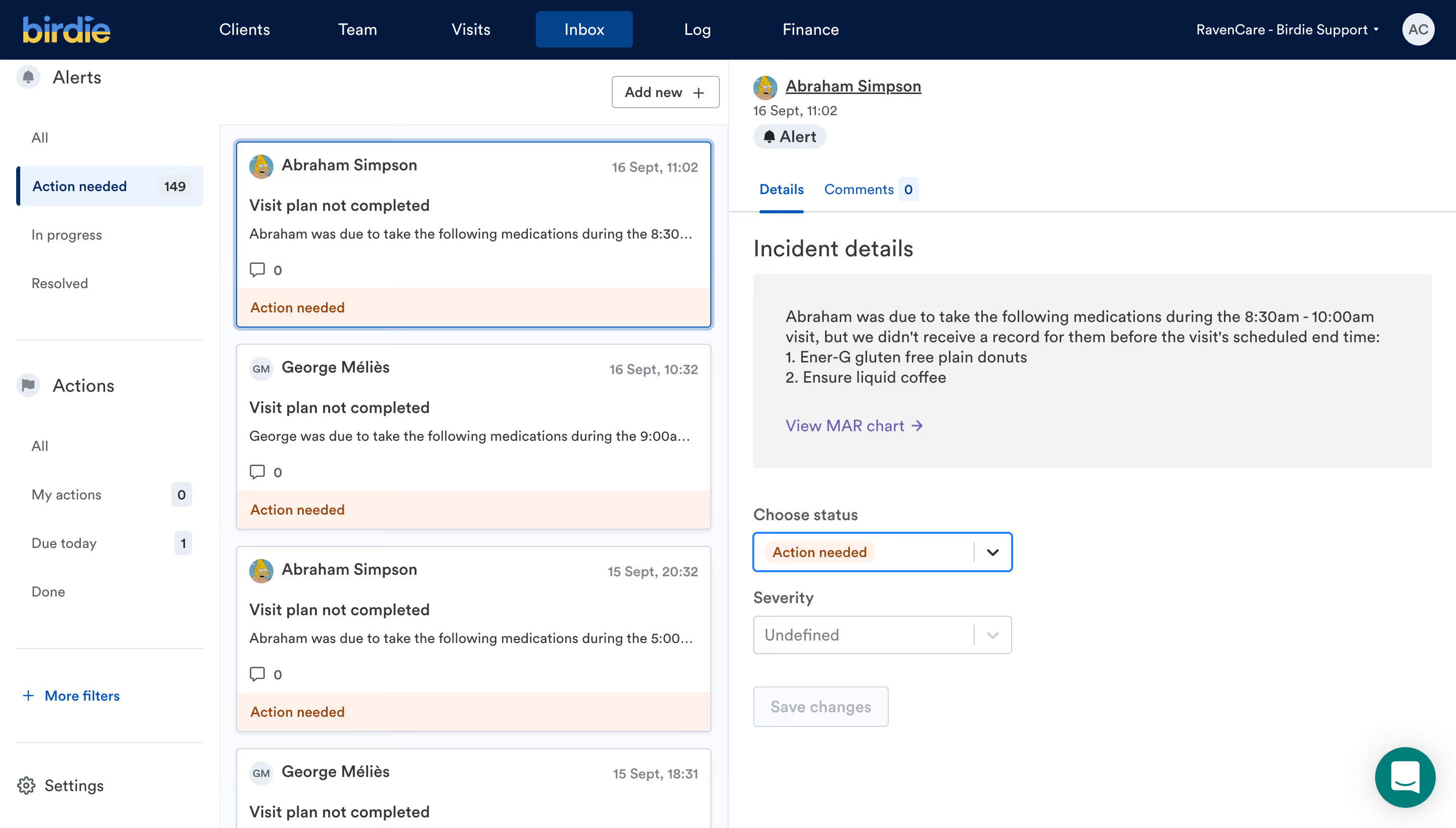
- Real-time alerts for missed medications, incidents, or deteriorating health
- Secure third-party access so health professionals and family members can view information without compromising privacy
- Pre-built compliance reports that show CQC-relevant data (e.g., percentage of medications recorded properly, response times to alerts)
- Complete audit trails with time-stamped records of every change
Providers who've moved to digital systems report measurable improvements. For example, agencies using Birdie respond to 26% more medication alerts within 72 hours after just one year.
For a focused buyer's guide to the notes and visit-recording layer specifically, see our guide to care notes software for homecare — including five questions to ask any supplier before committing.
Legal requirements: how long to keep records
Record retention isn't one-size-fits-all. The duration depends on the type of record and the people it concerns, guided by legal and regulatory frameworks like the Data Protection Act and NHS Records Management Code of Practice.
Standard retention periods:
- Adult social care records (including care plans): Minimum of 8 years after the conclusion of care
- Children's records: Until the individual's 25th or 26th birthday
- Clinical dental records: At least 11 years
Personal information should only be kept as long as genuinely needed for its original purpose or as required by law.
When records can be kept longer
There are exceptions. Records may need to be retained beyond standard periods in specific circumstances:
- Ongoing legal proceedings
- Audits or regulatory investigations
- Inquests or public inquiries
- Subject Access Requests under data protection laws
In these cases, records must remain available until the matter is fully resolved.
How to securely destroy records
Once records reach the end of their mandatory retention period, they must be disposed of securely. Simply deleting files or throwing paperwork in the bin is not sufficient (and may constitute a data breach).
For paper records:
- Use specialist confidential waste services with locked shredding bins (e.g., Shred-it, Iron Mountain)
- Ensure documents are cross-cut shredded or incinerated so they cannot be reconstructed
- Never dispose of care records in household recycling or general rubbish
For digital records:
- Relying on 'delete' or 'empty recycle bin' is not enough
- Use certified data deletion tools that overwrite data multiple times (e.g., Blancco, WhiteCanyon)
- For hard drives and physical media, use physical destruction (degaussing, shredding, or crushing)
- Engage IT asset disposal firms who provide certificates of destruction
Key considerations:
- Keep a log of what's destroyed, when, and how (important for demonstrating compliance in audits)
- Train staff on secure destruction procedures
- Never leave bagged records unattended before collection by a secure disposal service
By following these steps, you safeguard sensitive information right up to its final stage in the data lifecycle.
Emerging trends: what's next for care records
1. Predictive analytics and care quality scoring
Some systems now use historical data to identify patterns that indicate risk: increased falls, medication refusals, or declining engagement. This allows care teams to intervene earlier.
Birdie's Q-Score, for example, benchmarks your performance against CQC criteria in real time, helping agencies evidence their rating before an inspection.
2. Wearable health monitoring
Devices that track heart rate, movement, and sleep patterns are becoming more common. When integrated with digital care systems, they provide continuous health data that complements carer observations, creating a more complete picture of wellbeing.
3. Voice-activated documentation
Some providers are experimenting with voice recording for care notes, reducing the time carers spend typing and allowing them to focus on the person they're supporting.
What this means in practice
Good record-keeping isn't about generating more paperwork. It's about making sure the right information is available to the right people at the right time, so care can be safe, responsive, and person-centred.
If your team is still working with paper systems, the shift to digital isn't just about compliance. It's about reducing risk, saving time, and improving care quality in ways that are measurable and meaningful.
Learn more
- See how digital care records work in practice – interactive product tours organised by workflow
- Read how CHD Care improved their CQC rating with digital records – from paper to inspection-ready in months
- How to write daily care notes: examples and standards – practical guide to effective documentation
- Book a demo to see how Birdie's care management platform handles records, compliance, and auditing

Author:
Frances Knight
Published date:
December 20, 2023



%20(1).jpg)



%20(1)%20(1).jpg)


.svg)